
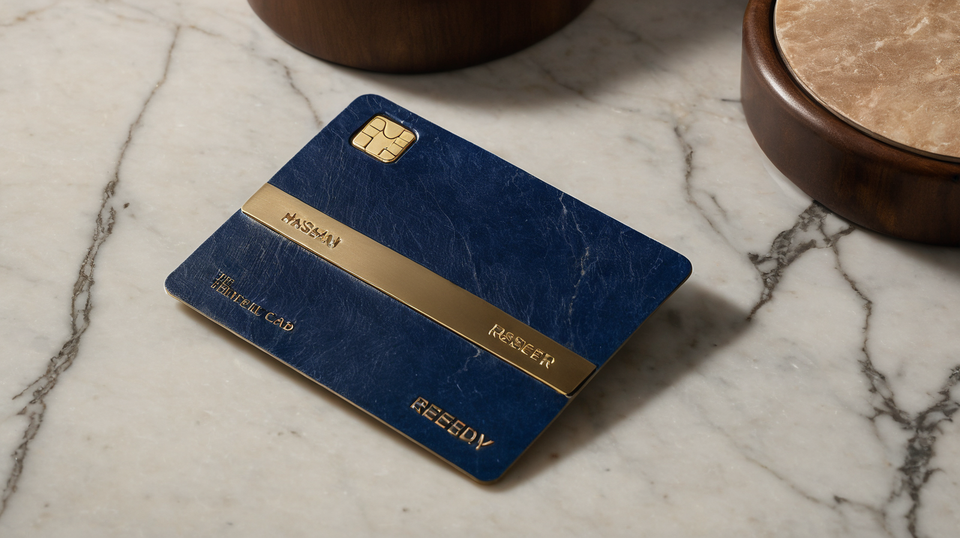
Chase Sapphire Reserve Review: Who Actually Benefits in 2026
PREMIUM · SINGLE-CARD REVIEW
The Chase Sapphire Reserve has a $795 annual fee (as of Q2 2026, increased from $695 to $795). Here is the math: if you spend $4,000 on dining and travel per year, you earn enough points and credits to get to an effective fee of roughly $195. This card pays off if you use the $300 travel credit and the lounge access. If you don't fly at least 8 times per year, get the Preferred instead.
By Credit Card Reviews Editorial — Reviewed by Ryan Calloway

Chase Sapphire Reserve
- Annual Fee
- $795
- Welcome Bonus
- 150,000 points after $6,000 spend in first 3 months
- Rewards Rate
- 8x Chase Travel; 4x flights & hotels direct; 3x dining; 1x all else
- APR Range
- 19.49%–29.99% variable
- Our Rating
The Verdict
If you fly 8 or more times per year and will use the $300 travel credit plus at least two of the newer Chase-affiliated credits, the $795 annual fee can net out to $225 or less after verifiable credits. The 150,000-point welcome bonus (after $6,000 spend in 3 months) adds roughly $1,500–$2,250 in travel value on top of that first-year math.
Apply for the Chase Sapphire Reserve →Pros
- $300 automatic travel credit applies to any travel purchase without enrollment or merchant restrictions.
- 3x on dining worldwide outperforms the Amex Platinum's 1x for cardholders who spend heavily at restaurants.
- Chase Ultimate Rewards transfers to World of Hyatt, a transfer-partner advantage not available on Amex Membership Rewards.
- 150,000-point welcome bonus is among the strongest current offers on a premium travel card.
Cons
- $795 annual fee is a $100 increase from the prior $695 — the card has now been repriced twice since 2020 (from $550 to $695, then $695 to $795).
- StubHub, The Edit hotel portal, and Exclusive Tables dining credits go unused if your booking habits don't fit those channels.
- Priority Pass plus Chase Sapphire Lounges does not match Amex Centurion Lounge quality in major domestic hub cities.
- At 19.49%–29.99% variable APR, carrying any balance erases rewards value entirely.
Get this card if…
- You fly 8 or more times per year and regularly use airport lounges.
- You will use the $300 travel credit each anniversary year, which is the floor of the card's value.
- Your combined annual dining and travel spend exceeds $6,000, making the points earnings meaningful against the fee.
- You want access to Chase's Hyatt transfer partner, which is not available on Amex Membership Rewards.
Skip if…
- You fly fewer than 8 times per year and won't use lounge access regularly.
- You carry a balance month to month — interest at up to 29.99% APR will erase any rewards earned.
- Dining rewards are your priority without heavy travel; the Amex Gold earns 4x on dining at a $325 annual fee (verify current fee at americanexpress.com before applying).
- You were on the fence at the prior $695 fee — the $795 price requires actively using the new platform-specific credits.
Frequently Asked Questions
Does the Chase Sapphire Reserve have foreign transaction fees?
No. The Chase Sapphire Reserve charges no foreign transaction fees, so you pay the network exchange rate with no surcharge on international purchases.
How does the $300 travel credit work on the Chase Sapphire Reserve?
The credit applies automatically to travel purchases each account anniversary year — no enrollment required and no single-airline restriction. Any purchase the card's system classifies as travel (airlines, hotels, car rentals, transit) counts toward the $300.
What credit score do I need for the Chase Sapphire Reserve?
Chase typically approves this card for applicants with a FICO score of 720 or higher, though approval also depends on income, existing Chase accounts, and recent credit inquiries. Approval is not guaranteed at any score.
How does the Chase Sapphire Reserve compare to the Chase Sapphire Preferred?
The Preferred charges $95/year vs. the Reserve's $795, earns 3x on dining (vs. 3x) and 5x on Chase Travel (vs. 8x), and lacks lounge access and the $300 travel credit. If you fly fewer than 8 times per year, the Preferred's lower fee likely delivers better net value — see our full Sapphire Preferred review.
The short version
The Chase Sapphire Reserve is a premium travel card that makes financial sense only for people who fly frequently and use the statement credits. The annual fee increased to $795 as of 2025, most recently from $695 (and before that from $550 in 2020) [source: bankrate.com/credit-cards/reviews/chase-sapphire-reserve/, as of Q2 2026]. In exchange, Chase added substantial new credits: up to $300 in dining credits through Sapphire Reserve Exclusive Tables, up to $300 in StubHub credits, up to $500 in hotel credits through The Edit portal, plus complimentary Apple TV+ and Apple Music. The original $300 travel credit and Priority Pass lounge access remain. The card earns 8x points on Chase Travel purchases, 4x on flights and hotels booked directly, and 3x on dining worldwide. The 150,000-point welcome bonus (after $6,000 spend in 3 months) is currently the strongest it has been. If you are comparing this card to others in its class, see our best travel credit cards round-up. [source: bankrate.com/credit-cards/reviews/chase-sapphire-reserve/, as of Q2 2026]
What the card actually pays
Reward rates (as of Q2 2026 — verify at chase.com before applying):
- 8x Ultimate Rewards points on Chase Travel purchases
- 4x on flights and hotels booked directly with airlines and hotels
- 3x on dining worldwide (restaurants, bars, cafes)
- 1x on all other purchases
[source: bankrate.com/credit-cards/reviews/chase-sapphire-reserve/, as of Q2 2026]
Welcome bonus: 150,000 Ultimate Rewards points after spending $6,000 on purchases in the first 3 months from account opening. At 1.5 cents per point (Chase's travel portal rate), that is $2,250 in travel value. At a more conservative 1 cent per point, it is $1,500. [source: bankrate.com/credit-cards/reviews/chase-sapphire-reserve/, as of Q2 2026]
Spending scenario: A road warrior spending $8,000/year on dining and $6,000 on direct airfare earns 24,000 points on dining plus 24,000 points on flights — 48,000 points total on those two categories, worth $480–$720 depending on redemption. Stack the 8x on Chase Travel purchases for any travel booked through the portal, and total annual points value can reach $1,000+.
Annual-fee math
The $795 annual fee (as of Q2 2026) is steep. Here is the credits inventory:
| Credit | Annual value | Notes |
|---|---|---|
| $300 travel credit | $300 | Automatically applied to travel purchases each anniversary year — no enrollment, no category restrictions beyond "travel." This is the cleanest credit on any premium card. [source: bankrate.com, as of Q2 2026] |
| $300 dining credit (Exclusive Tables) | Up to $300 | Applies to Sapphire Reserve Exclusive Tables reservations — not all restaurants. Usable only if you book through the Chase dining platform. [source: bankrate.com, as of Q2 2026] |
| $300 StubHub credit | Up to $300 | Toward event tickets purchased through StubHub annually. [source: bankrate.com, as of Q2 2026] |
| $500 hotel credit via The Edit | Up to $500 | Hotel bookings through Chase's The Edit portal. [source: bankrate.com, as of Q2 2026] |
| Apple TV+ and Apple Music | ~$240/year value | Complimentary subscriptions. [source: bankrate.com, as of Q2 2026] |
| Global Entry / TSA PreCheck | Up to $120 | Every 4 years; prorated ~$30/year. [source: bankrate.com, as of Q2 2026] |
| Priority Pass Select + Chase Sapphire Lounges | $300+ value if used | Access to 1,300+ lounges worldwide plus Chase's own lounge network. Day pass value typically $50–$75 per visit. [source: bankrate.com, as of Q2 2026] |
Conservative scenario (only sure-use credits):
- $300 travel credit: $300 (fully usable by virtually anyone who has an annual fee this high)
- Apple TV+ + Apple Music: $240 if you were already paying for these
- Global Entry prorated: $30
Conservative effective fee: $795 - $570 = $225
Active-user scenario (heavy traveler using lounges and dining credit):
- $300 travel credit
- $300 dining credit (via Exclusive Tables)
- Lounge access value (10 visits × $65 day-pass value = $650)
- Apple subscriptions: $240
- Global Entry: $30
Active effective fee: $795 - $1,520 = negative (you come out ahead before counting points earned)
The Reserve is one of the rare cards where, if you are the right user, the math genuinely inverts. The problem is that the new credits (StubHub, The Edit hotel portal, Exclusive Tables dining) require using specific Chase-affiliated platforms, which may not fit your travel or entertainment habits.
Where it's actually better than the Amex Platinum
- Dining rewards: 3x on all dining worldwide vs. the Platinum's 1x. If you spend $1,000/month on restaurants, that is a 2-point-per-dollar gap — worth $240/year at 1 cent per point.
- The $300 travel credit is automatic: Any travel purchase triggers the credit. No enrollment, no category selection, no merchant restrictions. The Platinum's airline fee credit requires you to select one airline and only covers incidental fees, not airfare.
- Chase Ultimate Rewards transfers to Hyatt: Chase's transfer partner list includes World of Hyatt, which consistently offers some of the best redemption values in hotel points (1–2.5 cents per point at top properties). Amex Membership Rewards has strong airline partners but Hyatt is Chase-exclusive.
- No foreign transaction fee: Same as Platinum, but worth confirming for both cards before international trips.
Where it's actually worse
- Lounge network: Priority Pass Select plus Chase's own lounge locations is solid but does not match Amex's Centurion Lounge network for domestic quality. If you fly frequently through cities with Centurion Lounges (New York JFK, Los Angeles, San Francisco, Dallas, Las Vegas, others), the Platinum's lounge access is meaningfully better.
- Points on airfare: 4x on direct airline bookings vs. the Platinum's 5x. For heavy airfare spenders, the Platinum earns more per dollar on flights.
- The new credits are platform-dependent: The StubHub credit, The Edit hotel portal, and Exclusive Tables dining credit all require booking through Chase-specific channels. If you already have preferred booking channels (your travel agent, a hotel's direct site, Ticketmaster), these credits may go unused.
Who shouldn't get this card
- Anyone who flies fewer than 8 times per year. The lounge access is the daily-life anchor of the Reserve's value proposition. If you are not in airports regularly, you are paying for a benefit you rarely use.
- Anyone who will not use the $300 travel credit. This is the floor of the Reserve's value — if you somehow cannot use $300 in travel purchases in a year, this card is overpriced.
- Anyone looking primarily for a dining card without travel. The Amex Gold earns 4x on dining at $325/year (verify current fee at americanexpress.com before applying) — better dining rewards at lower annual cost.
- Anyone carrying a balance. The Reserve's APR range is 19.49%–29.99% variable APR (verify the current range at chase.com/rates before applying). If you carry a balance, interest charges will erase any rewards value. If you have credit card debt, look at balance transfer options before adding a $795/year card.
The bottom line
The Chase Sapphire Reserve's recent reprice from $695 to $795 represents a $100 increase — the second reprice since 2020 (the fee moved from $550 to $695 first, then from $695 to $795). Chase compensated by adding substantial new credits — but those credits require using Chase-affiliated platforms, which may or may not fit your lifestyle. The honest assessment: if you already used the Sapphire Reserve at $550 and regularly captured the travel credit and lounge access, the new benefits at $795 probably justify the increase. If you were on the fence at $695, the $795 price point requires a harder look at whether you will actually use the Exclusive Tables dining credit and StubHub credit specifically.
The number that should make you reconsider: if your annual dining and travel spend combined is below $6,000, your points earnings alone will not keep pace with the annual fee. The credits are the justification; the points are secondary. If you fly 8+ times a year and will use at least 3 of the new credit categories, this card pays off. If not, the Chase Sapphire Preferred at $95/year gives you the same transfer partner access at a fraction of the cost — see our Sapphire Preferred review for that comparison.
Verify current annual fee, APR, and benefit terms at chase.com before applying. Card terms change. Approval is not guaranteed regardless of your credit score.
This article was AI-assisted and reviewed by our editorial team.